The following article appeared in the print issue of Ponca City Monthly magazine, which includes hyperlocal stories about Ponca City. Get full access to all online articles, videos, and content by becoming a paid subscriber. We offer free and paid subscription plans. Find rack locations to pick up your free print copy here, or subscribe here to get online access plus exclusive content.
For any writer, a blank, 8 ½ by 11-inch piece of paper (formerly spooled into a typewriter, now Microsoft Word’s blank screen equivalent) can loom large and forbidding. That cursor benignly blinks away waiting for prose to flow through the writer’s fingers and onto that page.
Artists face the same challenge when confronting their own blank canvases. Muralists face a blank wall.
A really big one.
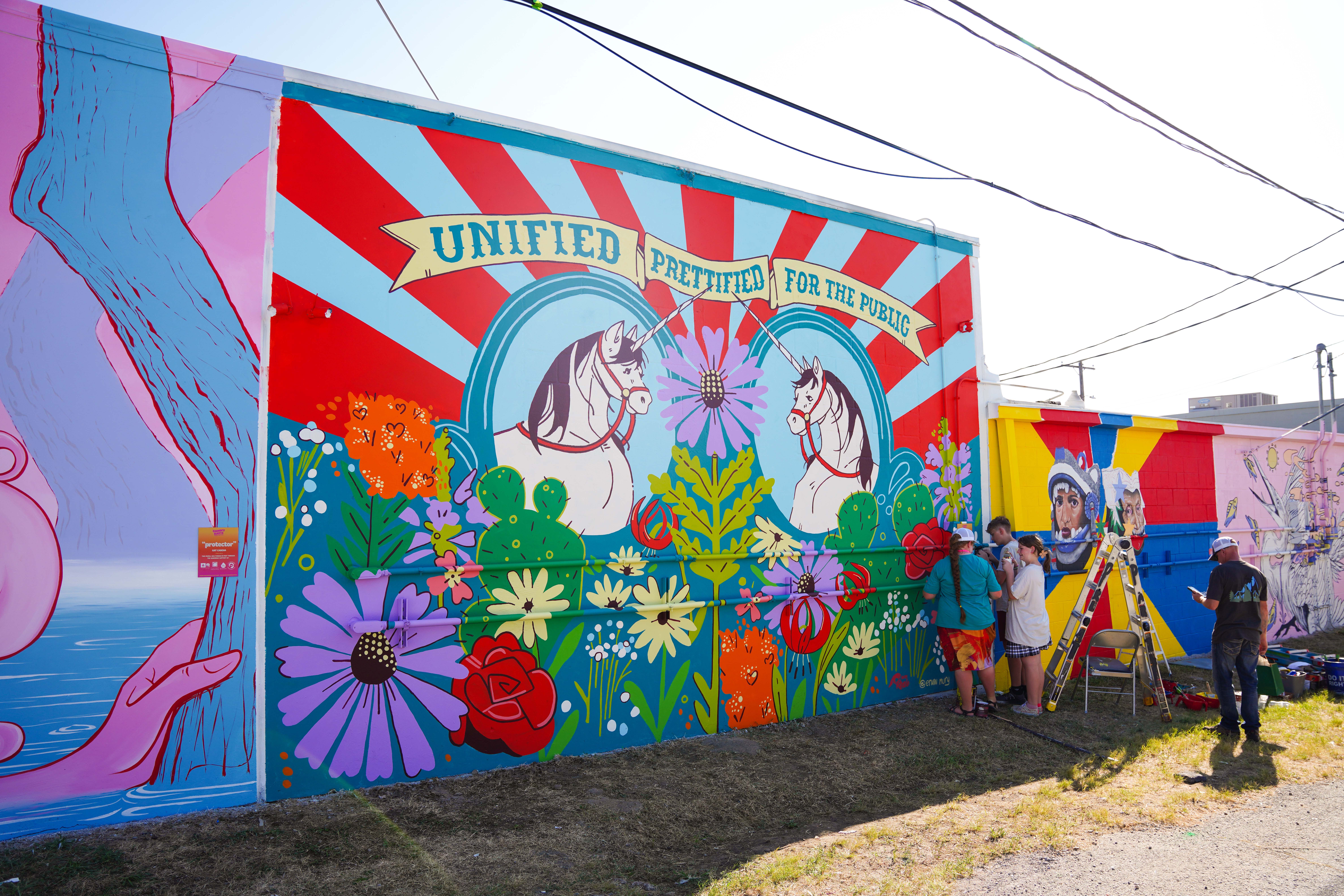
For those participating in the Sunny Dayz Mural Festival (artists begin arriving Saturday, May 25 to create their murals in time for the June 1 festival finale), the walls can be as formidable as 15 feet high by 23 feet wide.
Curious as to how these artists can imagine, design, transpose and then paint on a potentially intimidating canvas, I asked a few muralists about their process. The responses are a lesson in facing a challenge, making it manageable and giving oneself permission to make course corrections in the process.
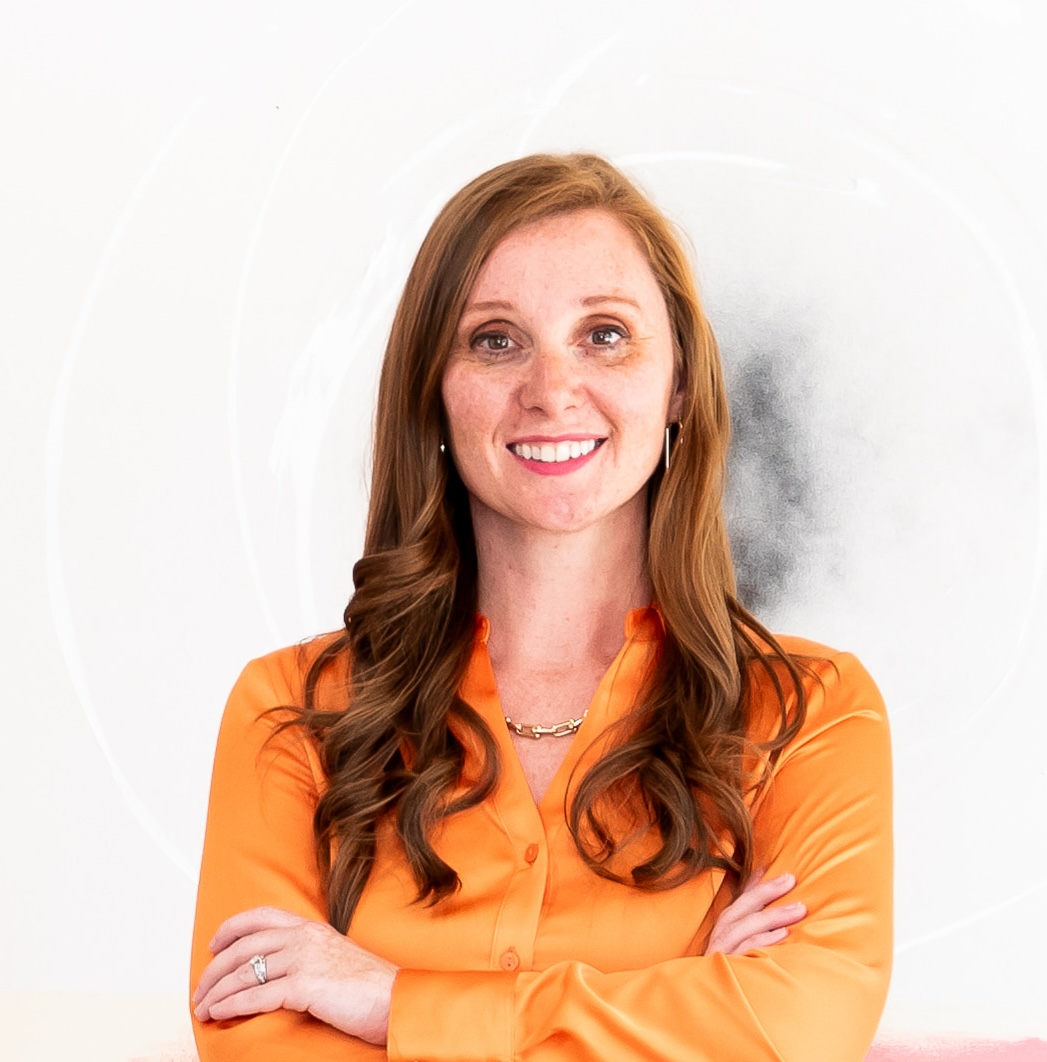
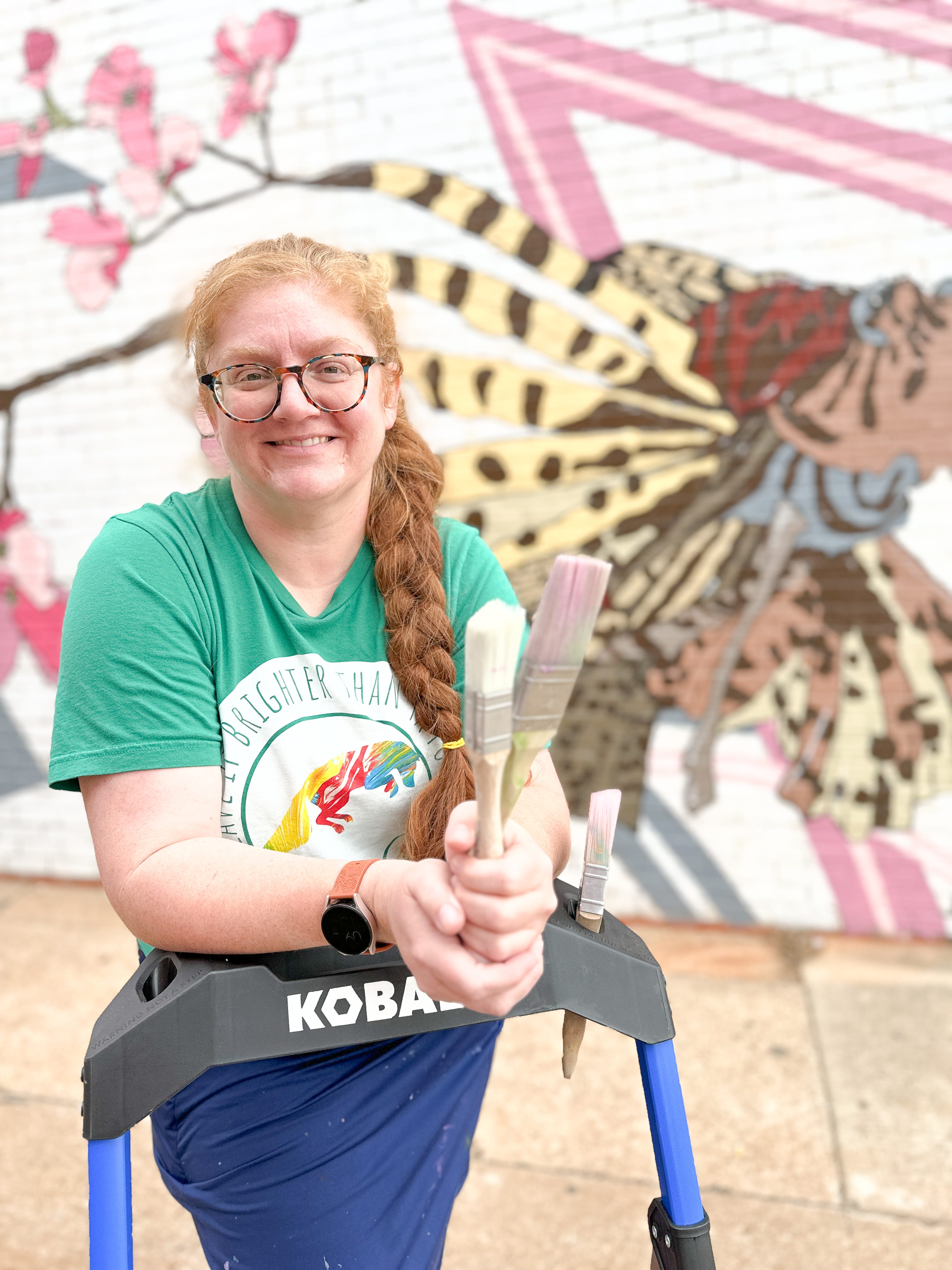
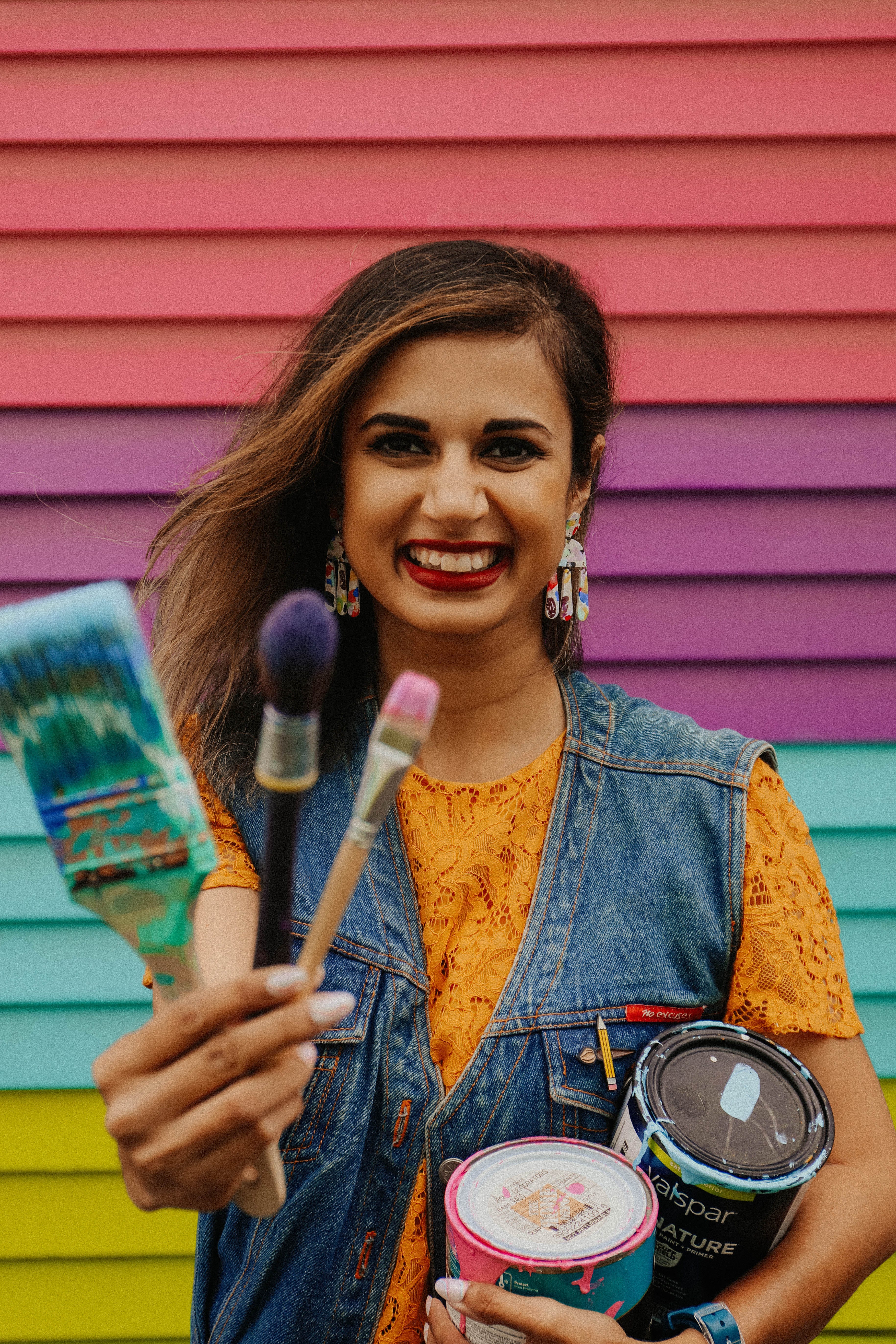
Kortni Miller, aka “Red Dirt Rosie” is a Ponca City artist who painted at last year’s Festival in Tulsa. This year she is assisting with festival marketing. Stephanie Wright is a Blackwell native and experienced muralist. This is her first Sunny Dayz Mural Festival. Aditi Panchal, Oklahoma City, has participated in Sunny Dayz Mural Festival since the beginning. This year she returns as a painter after volunteering the previous year.
Q: For Kortni and Aditi, you have been involved in Sunny Dayz Mural Festival for years, why do you keep coming back?
Kortni: Everybody that I have met that has been associated with the Sunny Dayz movement has been very loving, very excited and very supportive and encouraging … I really like the networking aspect and connecting in mural fest with other artists. It opens up a lot more moments of opportunity and moments of encouraging other people.
I love having an expansive network of artists that, everybody’s doing something different, all our styles are different, but, at the end of the day, we’re all just trying to make really big, beautiful art that changes the world.
Aditi: I participated as an artist in their inaugural year (2021), and I absolutely loved the community that it created for female and non-binary artists. It is the first festival of its kind in this state, and it’s an organization that has created opportunities even outside of the festival, itself. You become a part of the family, in a way, and get to meet so many artists from all over the country (and the world, this year!) What’s not to like?! As an LGBTQ+ artist and a woman of color, this is the organization that I am proud to be a part of!
Q: Once the design is on the wall does this become a giant paint by numbers?
Kortni: In my experience, it has varied. If I’m just tracing it, like with a projector, I usually stick pretty much with the plan. If it has a lot of detail — the lionfish had a lot of tinier spaces — then it does end up being like a giant paint by number. Other ones I’ve done, I’ve used a doodle grid which, basically, you draw scribbles on a wall and then superimpose the picture and then kind of free hand it up using your doodle grid and scribbles as reference points. There’s a lot more room for it to be organic in that nature … I feel a lot better just tossing it up and seeing how I feel.
Stephanie: My work never follows that neat of a trajectory. I am constantly growing and changing and so is my work. I have a hard time ever being finished! I love to paint and understand that I will not be able to keep working on the mural for more than the designated week, but I imagine I will be dreaming of new cool things I could have done to make it even better for years to come.
Aditi: Yes! Most of the work is already done, so once I project it onto the wall, it’s a paint by numbers and it’s very fun!
Q: Can little moments provide inspiration or inspire changes?
Kortni: I believe they can! You are definitely introduced to new elements while on site working, and it can very much benefit positive change to the installation. Any time someone stops by to visit and is excited about the piece is very inspiring. In the past I've changed colors, even minimal parts of the composition because the sunset played across the wall in a really neat way and why not have the composition play along with that?
Stephanie: Yes. I try to be open to inspiration and change is a big part of my artwork. My work rarely meets what I imagine so when the inspiration comes, and I (can) make the changes, it gets me closer to the ideal.
Aditi: Sometimes, if I think an element could benefit from more color or a gradient of some sort, I add it in there just for that extra level of detail. I’ve also made adjustments to the “type” portion before if it needs it. Seeing it at a larger scale definitely inspires me to “do more” once I’m painting.3
Q: Does having an audience watching you work affect your work?
Kortni: For me personally, I love popping in my headphones and working. Art is kind of my, not necessarily my escape, but I have a whole story in my head. Simultaneously, when you’re out working publicly and you’re making art, there’s so many phases of public art that are not “pretty” or people can’t tell what it is. So, it means a lot when people stop and are excited about what you are doing, and they want to ask questions. I think a balance. I like the solitude and just getting to work but I also love people sharing that they’re excited and they want to know what is being created and then coming back when it’s finished.
Stephanie: I have painted in public before in a megachurch during worship and in a lobby of a cancer center to add art and joy to those undergoing treatment. Painting live is like performing and it takes so much energy. I am concerned about the physical demands of an outdoor mural. I enjoy the audience support but at the same time I struggle to get (and stay) in the flow when I stop and engage with people. People are more important than painting is so it will be a conflict of attention. With only a week to do such a large mural on my own, I believe I will have to focus. Hopefully I will finish in time to enjoy people.
Aditi: Not really! I’ve had people watch me paint before, and even though I try to not make mistakes, sometimes there’s a small spill or a paint drip. They are usually super gracious and complimentary, so it takes the pressure off!
Q: If the reward is in the feedback from viewers enjoying your finished mural, what are some of your favorite reactions?
Kortni: One of my favorite things when I was painting the lionfish was a lot of the homeless community traffics that alley and they were all really excited to have something beautiful that they could enjoy seeing. And it kind of gave them some (ownership). Because, to them, it’s kind of “their” alley. Just getting to see something pretty, seeing somebody invest in something public that everybody can enjoy seeing means a lot. And that’s something I really love about public art: It calls people to have ownership about where they live, and it really breaks down the barriers. Museums are wonderful but not everybody can go, not everybody has access to get to them. And sometimes (the art) is installed in such a way that (some) people don’t know how to understand it. But, I think, when we put art in the very normal, day-to-day, places where people are, like alleys and walls, outside on windows, there is a whole community of people that maybe we aren’t even talking to regularly who are seeing that and enjoying that, and it makes them proud of their city and their community.
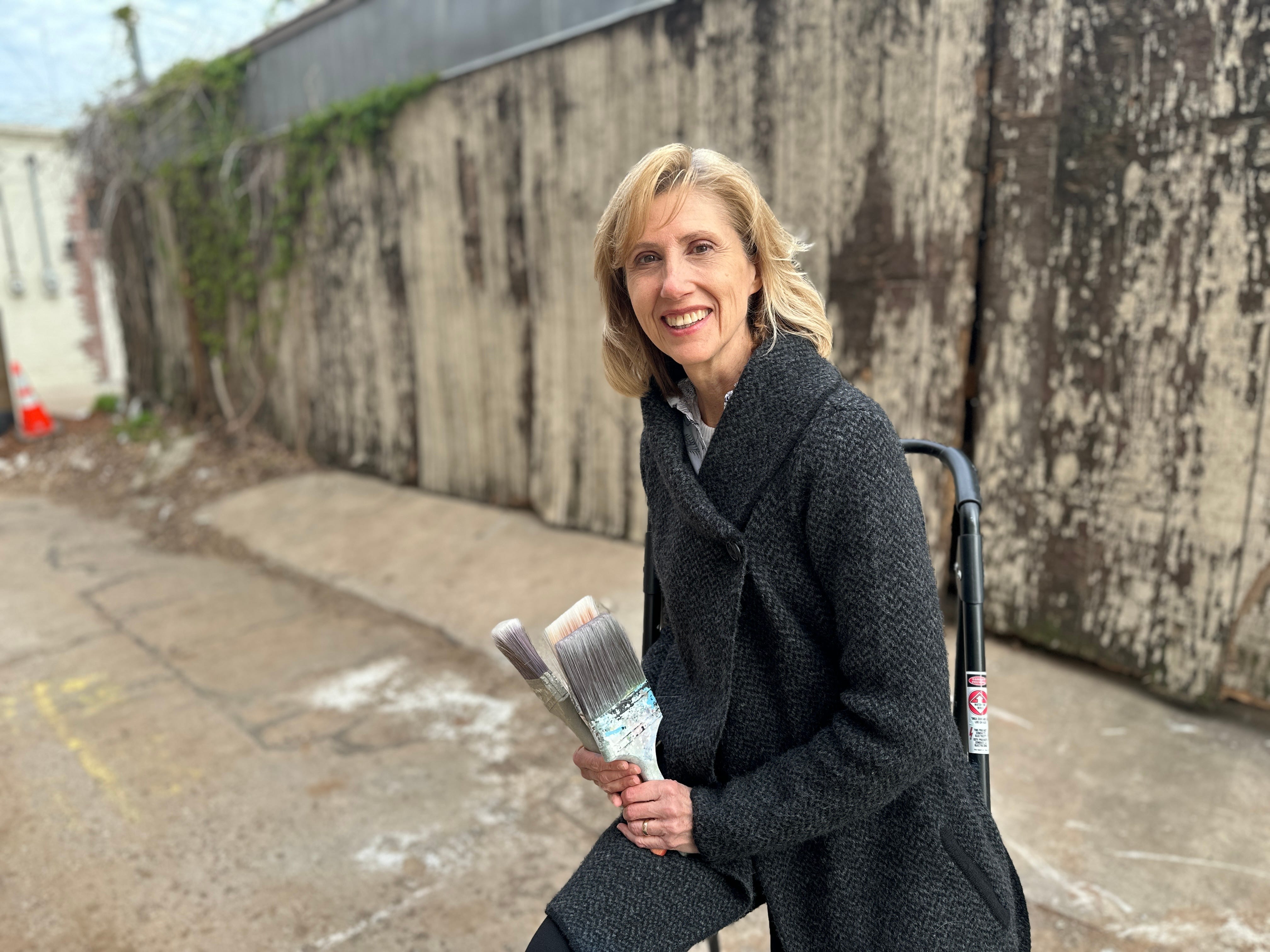
Stephanie: I am always hoping to connect to people through my work. When somebody picks up on a hidden message or really gets what emotion I am trying to convey then if brings me joy.
Aditi: My favorite reaction is “this makes me feel happy!” It’s always rewarding when the viewers are overjoyed by the vibrant and bold colors I use in my work. I almost always include an uplifting phrase in my murals as well, so that also usually resonates with my viewers!
Q: What is the response you hope to inspire from the viewer?
Kortni: I hope for excitement and wonder. I hope that it calls them to have some ownership and pride in and for their community, with public art being accessible to all. I very much hope that they see the value and beauty of putting color and ideas on walls rather than keeping them bare. I hope that, young or old, they are inspired to try their hand at creating. That's probably the big dream response I hope for. When someone stops and sees the art and is so excited and inspired that they want to create, in whatever form of their choice. Our creating should inspire others to create.
Stephanie: I would love the viewer to learn something profound that they did not see before. I believe there is power in art for everyone involved. I hope to use my power to create more love and glory on the planet. If someone responded to the way the mural moved them after the festival commotion passed, then I would know I made an impression.
Aditi: “This looks printed!” (haha) I’ve seen work from other artists who hand paint murals, and I could swear that they look printed on the wall in vinyl. I hope to get to that level soon!
➡️ Opt in or out of different newsletters on your “My Account” page.
➡️ Learn more about Ponca City Monthly+
Ponca City Monthly is a locally owned publication that delivers hyperlocal news in print and online.
Like what we are doing? Feel free to forward this along and tell a friend.
Sponsorship information/customer service: email [email protected]