The following article appeared in the print issue of Ponca City Monthly magazine, which includes hyperlocal stories about Ponca City. Get full access to all online articles, videos, and content by becoming a paid subscriber. We offer free and paid subscription plans. Find rack locations to pick up your free print copy here, or subscribe here to get online access plus exclusive content.

Water you waiting for?
Drinking water is vital to health. It plays a key role in many of our body’s functions. In fact, our bodies are about 60% water! Not drinking enough water can lead to dehydration and problems throughout the body.
There is no universally accepted “perfect” amount of water that you should drink. Most resources suggest each day that men drink 13 to 15 ½ cups, women drink 9 to 11 ½ cups, pregnant women 10 cups, breastfeeding women 12 cups, and kids and teens 6 to 8 cups. Some experts advise to drink ½ ounce to 1 ounce per pound of body weight per day or 1 ounce per pound if playing sports or working outside in the heat. The perfect amount for each person depends on activity level, health conditions, height, weight, and gender. Drinking too much water is almost never an issue for healthy, well-nourished adults. You are drinking enough water if you rarely feel thirsty and your urine is colorless or light yellow.
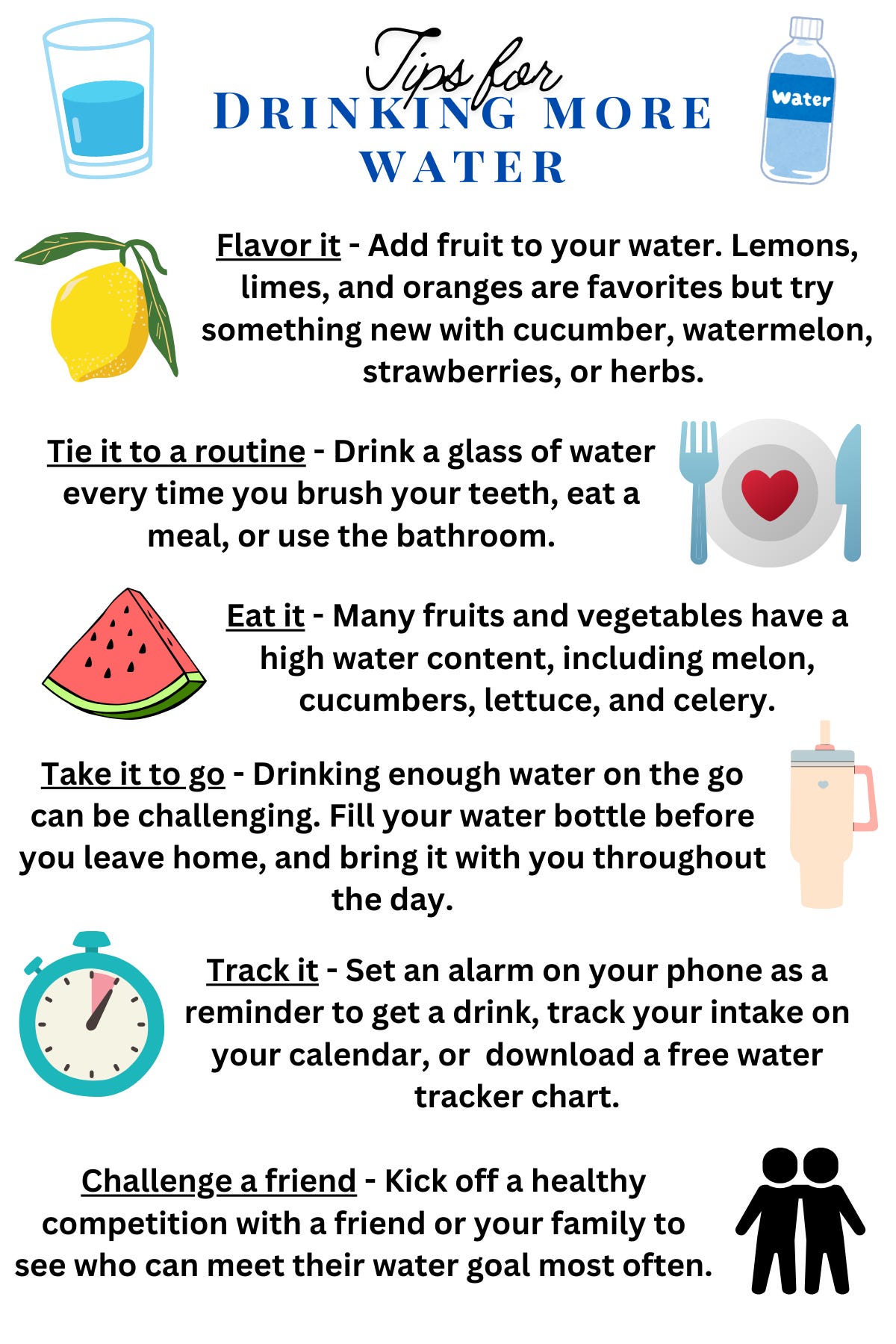
Dehydration, or losing more fluids that you take in, can happen to anyone, but is most dangerous for young children and older adults. Typically, children get dehydrated due to vomiting and/or diarrhea and older adults naturally have less water in their bodies. Older adults may also have a medical condition or take medications that can increase the risk of dehydration. Many people, especially older adults, will not be thirsty until they are already dehydrated. Besides urine color and thirst, indicators of dehydration may be fatigue, dizziness, light-headedness, dry mouth or lips, and/or urinating less than four times per day. During the hot summer months, consuming enough water every day is the best way to prevent heat illness. If increasing your water intake does not improve your symptoms of dehydration, contact your medical provider.
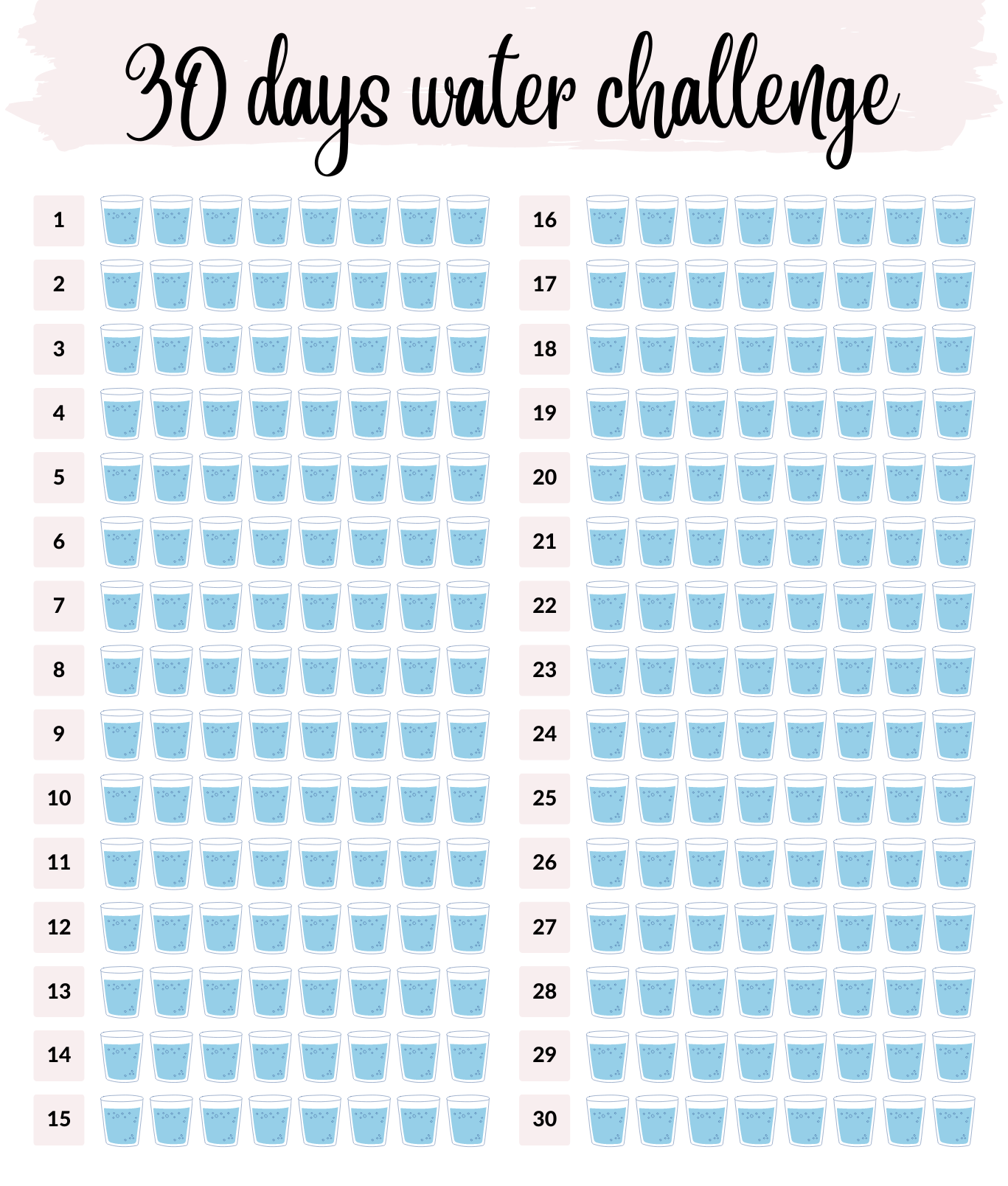
Try using the chart at below, or in the Health and Wellness Calendar available for download on the United Way of North Central Oklahoma website, to track your water intake this month. Challenge yourself to increase your water intake each week or challenge a friend or family member to see who can meet their water intake goal for the month!
According to Medical News Today, water in the body:
Lubricates joints – Cartilage, found in joints and in the spine, contains about 80% water. Dehydration can decrease the joints’ shock-absorbing ability, leading to joint pain.
Forms saliva – Saliva helps us digest food and prevents friction in our nose and eyes.
Delivers oxygen throughout the body – Blood is 90% water and blood carries oxygen to all parts of the body. Oxygen is the fuel that makes organs and muscles work as they should.
Boosts skin health – If dehydrated, the skin becomes more vulnerable to skin disorders and premature wrinkling.
Cushions the brain and spinal cord – Dehydration can affect brain structure and function as water is used in the production of hormones and neurotransmitters. Not enough water can lead to problems with thinking and reasoning.
Helps to regulate body temperature – Water is stored in the middle layers of the skin and comes to the skin’s surface as sweat when the body heats. When there is too little water in the body, it may be less able to tolerate heat stress.
Aids in digestion – Bowels need water to work properly. If dehydrated, it can lead to constipation and an overly acidic stomach, causing ulcers or heartburn.
Flushes body waste – Water is needed in both sweating and the removal of urine and feces.
Helps maintain blood pressure – Not enough water can cause the blood to thicken and increases blood pressure as a result.
Makes minerals and nutrients accessible – These resources dissolve in water so that they can reach different parts of the body.
Keeps kidneys working properly – Dehydration can lead to kidney stones and other kidney problems.
Mental Health American Stress Screener
➡️ Opt in or out of different newsletters on your “My Account” page.
➡️ Learn more about Ponca City Monthly+
Ponca City Monthly is a locally owned publication that delivers hyperlocal news in print and online.
Like what we are doing? Feel free to forward this along and tell a friend.
Sponsorship information/customer service: email [email protected]