
Omaha Beach hasn't changed much in 75 years. It's still four miles long and a mile wide at low tide. It’s easy to walk along the beach and peer up at the 100-foot-high cliffs that our guys had to ascend. About 1,200 of them didn’t make it.
But the ridge above the beach has changed significantly—from killing fields to a calm, pristine memorial.
There are 28 military cemeteries in the region. The two American cemeteries have been combined into one at Colleville.
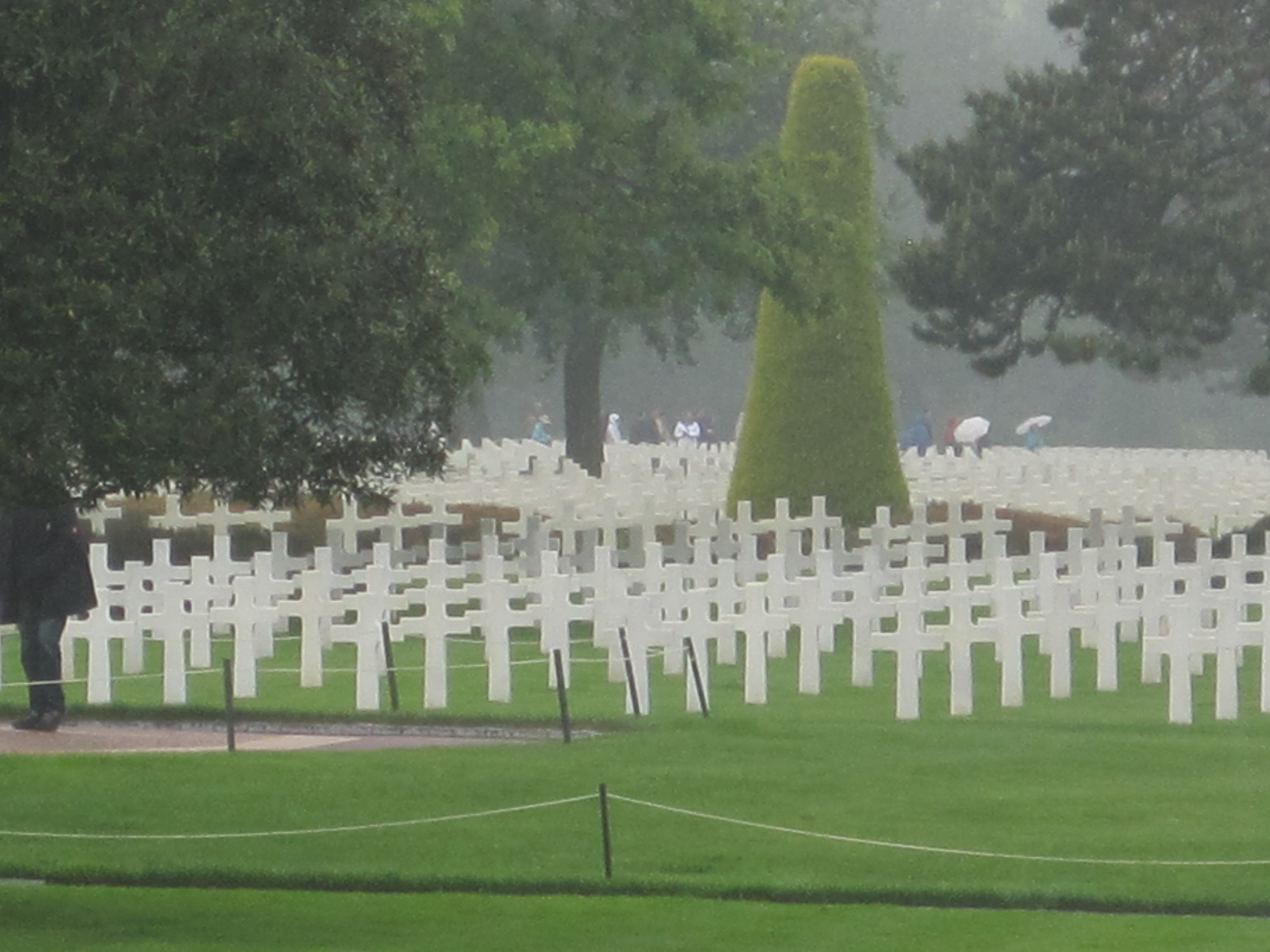
Today it’s difficult to imagine the area as a blood-soaked ground littered with carnage, bomb craters, rotting corpses and war material. Like all U.S. military cemeteries, Colleville is beautifully maintained.
The peaceful, almost utopian setting claims 172 nicely landscaped acres perched atop a bluff directly overlooking Omaha Beach.
The entrance opens into the Garden of the Missing with a round wall about 100 yards across that lists the names of all the soldiers who were never found—presumably because their bodies washed out to sea after they were killed on the beaches.
I looked around and saw the names of PFC Daniel W. McKenzie and Lt. Jess A. Watson from Oklahoma, and PFC Lawrence J. Masterson from my native Kansas.
The two cemeteries host 9,387 graves—most with white crosses but including 149 stars of David. The graves include four women, four civilians, a handful of soldiers killed in World War I, one father/son combination and several sets of brothers.
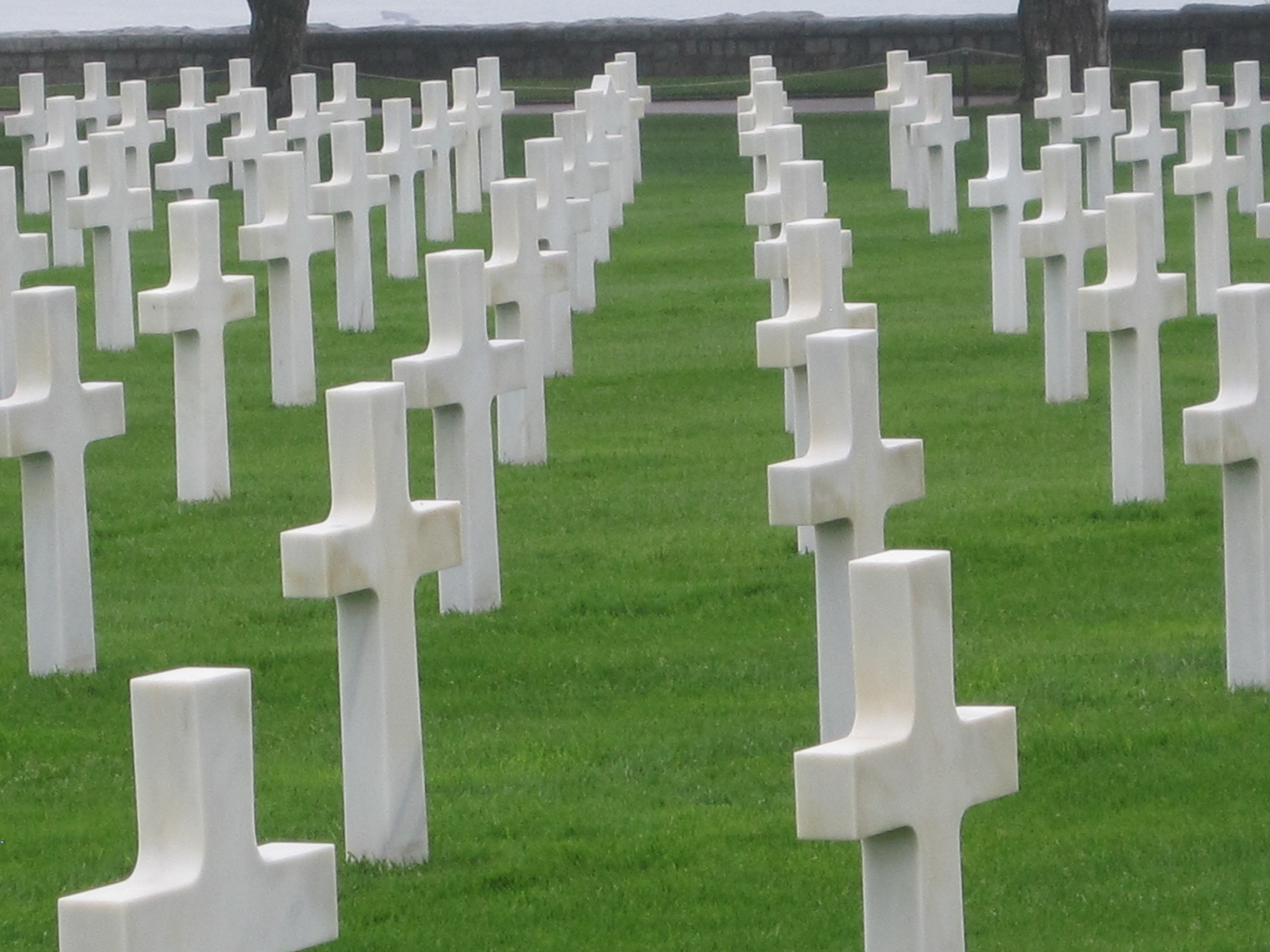
There is no organization—no sorting by rank, date of death or branch of service. The attitude is that all soldiers are equal in the eyes of God. General Theodore Roosevelt, Jr., for example, is interred next to a private.
Everyone is buried in such a manner that if they could suddenly sit up for one last moment, they would be facing the United States.
Although all markers are precisely aligned, many do not have names, bearing only the inscription “A soldier known but to God.”
But most markers have names, so I walked around and said a silent thanks to PFC Thomas G. Buchtel from Kansas, and S. Sgt. Ray L. Scott and PFC Zeagle C. Arnett from Oklahoma.
Almost 25,000 American soldiers were killed in this area, but in the 1950s families were given a choice of having remains repatriated to the U.S. or staying in France. About two-thirds returned to the states.
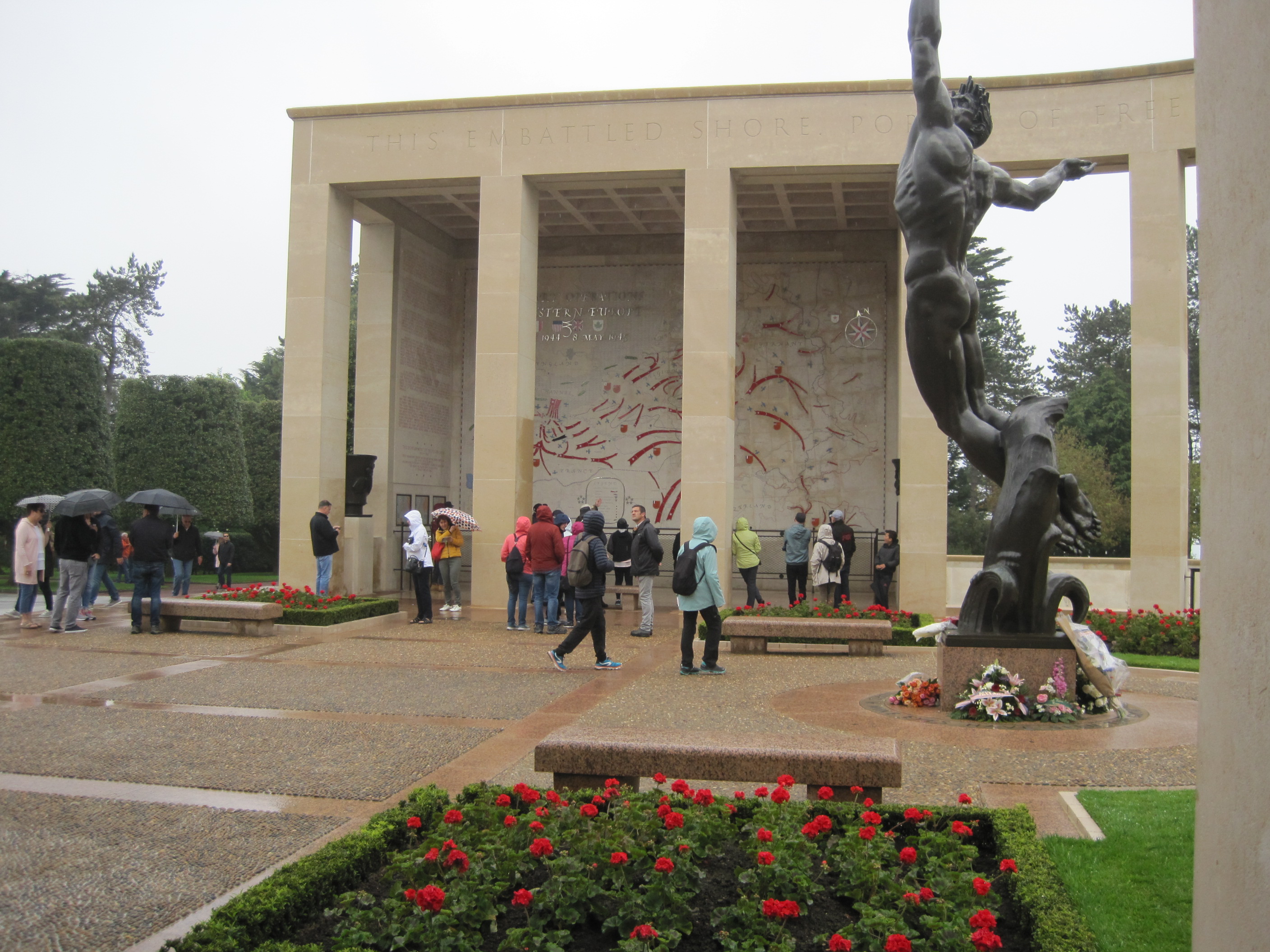
The cemetery presents a truly striking visage. It is humbling to stand there looking at the perfect rows of crosses and stars surrounded by manicured green lawns, shrubbery and trees.
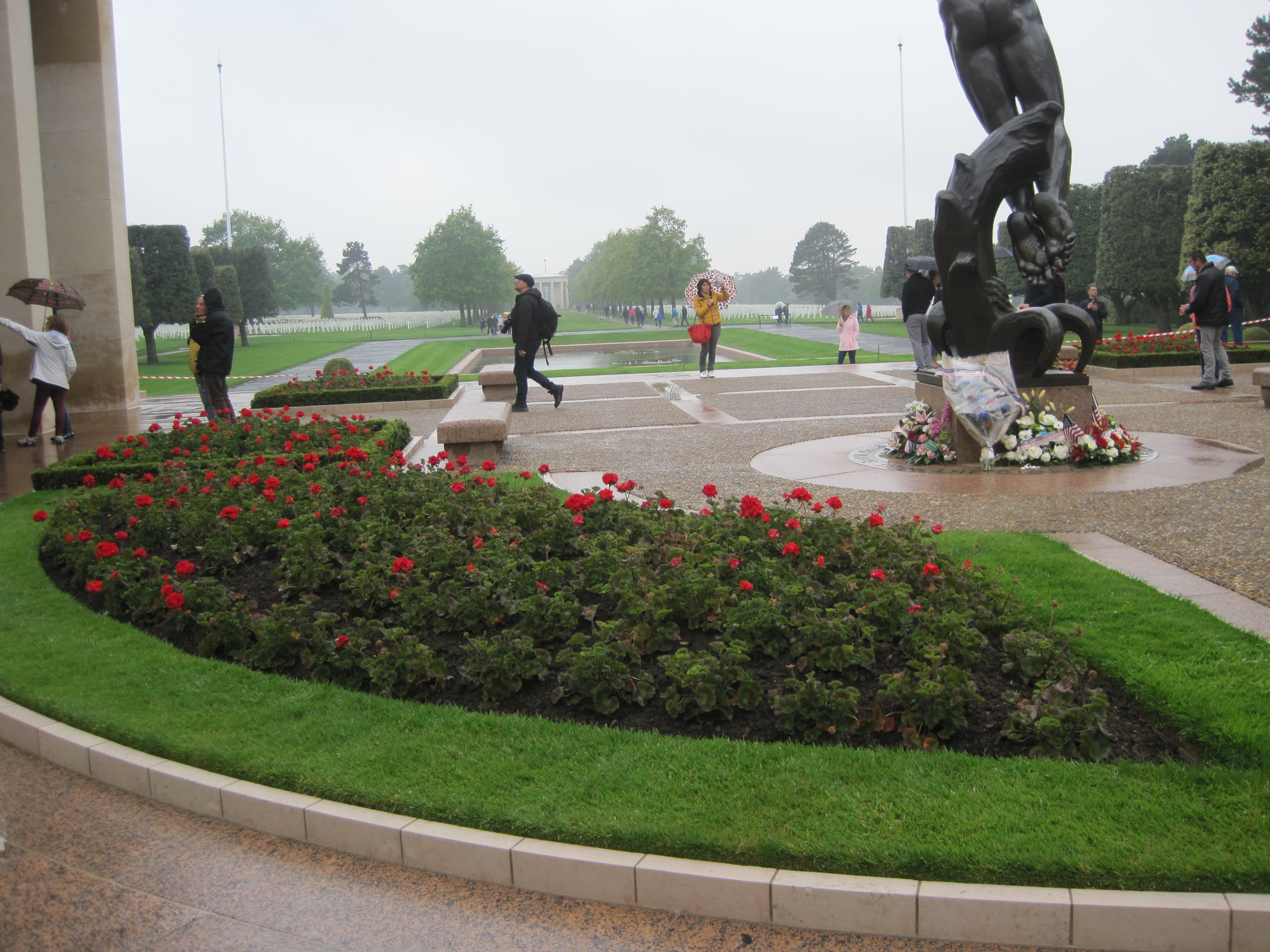
Gray and marble monuments dot the ends and sides of the burying fields, while puffy white clouds drift through the blue sky. A series of American flags stand at full mast—tall, crisp and proud.
There wasn’t much noise—mostly a hushed reverence, as there should be. I could hear only the gentle breeze wafting through the treetops and a faint sound from the incoming tide below.
A visit here is guaranteed to be emotional. It is impossible to view the cemetery without a lump in your throat and tears in your eyes.
In 1914 the British poet Rupert Brooke penned his best-known work, The Soldier. The poem was prescient, for Brooke died the next year in World War I.
The Soldier invokes a simple request: “If I should die, think only this of me. That there’s some corner of a foreign field that is forever England. There shall be in that rich earth a richer dust concealed . . .”
If I adopt Brooke’s sentiments and substitute 9,387 of my countrymen for Brooke’s solitary grave, then I can argue that the dust in France is richer because those American soldiers are there.
That would mean, of course, that there is now some corner of a foreign field that is forever America.